Actually a weblog is also a web site just that it is usually provided free. The thing which I realized is that weblog just doesn't go well with web site per se.
First of all, if you are going to propose something for someone (using weblog), that person is just not going to pay you because weblog is free.
Secondly, he or she got no time to do it.
So, this is bad economy which kills away opportunity, creativity and economy and the money goes back to the big brands like Google and Microsoft.
Therefore, I can almost guarantee that if you are going sell any product in the form of using free tools (such as weblog), no one will pay you anything. Because people are selfish in nature and no way you can get out so easily. But these potential customers got no time to DIY the value proposition which they can actually gain. But they don't care anyway. Ignorance.
In retrospect, whenever something as popular as weblog is launched for free or something like that, the party providing it as product is going to go close down soon. The best thing that you can come out of it is to create services out of these free tools.
Facebook is another free platforms and as I analyzed it earlier, it is a good platform for marketing. Facebooks phenomena killed many things unaccounted for but at the same time, it creates an opportunity of economy that is service-oriented in nature.
Not a bad idea to invent something which will spawn a world of service activities.
This brings me to a dim lighted conclusion that if you can create something which will do-away something, then it can be a hit. But if you are going to create something on top of something, don't market it as a product, go for services. And if you are doing something which people-can-easily-DIY-but-ain't-got-time, do it as a service as well. This will balance back the harmony.
But this is unfriendly reality for product makers out there in case of shock received from the media daily about potentially new tools. That is why, one needs to invest time in reading tech blogs.
Showing posts with label Business. Show all posts
Showing posts with label Business. Show all posts
Friday, March 20, 2009

Wednesday, March 4, 2009
Make the Most of Your Energy - APC (KL Hilton 5 Mar 09)

APC was previously acquired by Schneider Electric not too long ago.
The media is greeted to a presentation by Mr. TS.Khoo (VP for ASEAN). According to TS (as he preferred to be known), during this economic crisis period, ASEAN is the place to be.

APC is most known for its innovation capabilities and the acquisition by Schneider caters for the ability to provide total solution and also turnkey solutions.
To understand this easily, APC used to provide IT-centric products and services while Schneider used to provide products and services on electrical engineering. Now, with their combined capability, they can simply provide a 4C design model for data centers.
- Components - Modular and scalable, with best-in-class efficiency
- Close-coupled cooling - Placement of cooling units near the heat source
- Containment - Thermal containment of airflow in high-density zones
- Capacity and energy management - Instrumented intelligence to optimize use of power and cooling capacity
- Renewable energies solutions
- Automation
- Energy efficiency
- Critical power and cooling
- Eletrical distribution & wiring devices
The vision of APC (by Schneider Electric) is thus to provide safe, reliable, efficient, productive and green energy usage. Their target market is data center because that contributes to about 2% of energy usage globally. No big deal but it generates 98% of opportunities. Check out survey from IDC last year (2008).
According to Mr.Benedict Soh (Enterprise Business Development Director), energy consumption for data center is growing at 12% per year and the pressing issue for data center to tackle is in fact power and cooling efficiency which not just to help the environment but also to save cost.
Most people like me thought that APC was just selling UPS (Unlimited Power Supply) but in actual fact, they also provide professional services and consultancy to clientele in the industries of banking, health care, telecommunication and government sectors.
And more interestingly, data center need not just limit to big data-centers like MyLoca in Cyber Jaya or AIMS somewhere near Bukit Bintang. It can also be a data-center for a factory with self managed applications servers and etc. As long as you need to house your servers properly with air-conditioning, you can consider it as data-center. In that case, my office has a data-center too.
Mr.TS Khoo is optimistic about the current economy crisis, first of all, let me assure you that they don't have cash flow problem because of recent acquisition from Schneider Electric which has a total sales revenues of Euro 4,652 billion. Also, APC by itself is Euro 17.3 billion revenues company with combined workforce of 120,000 people around the world.
On the question about the trend of company being acquired and so there will be less data center around, Mr. TS Khoo has this to offer.
First of all, the company focuses on solutions and in any good or bad day, it is beneficial for them if there are more data centers or if there are more consolidation of data centers. This is because have solutions for data center consolidation as well. Period.
He added that at times of crisis, the strategy is to stay with customers by providing more supports and also better services. (
Finally, APC is also announcing two new launches which are:
- Integration with Microsoft Systems Center Operation Manager 2007
Integration of APC's data center management suite to tightly couple with Microsoft's System Center Operations Manager 2007. This integration will give data center managers the ability to view and manage physical infrastructure, including power, cooling, physical space and security, as well as providing a comprehensive view of the health of the servers, applications, and clients within the datacenter. - Second Generation Symmetra PX - All in one modular power protection UPS System for data centers
Symmetra PX UPS provides up to 48kW of power protection for 400V deployments in a single rack footprint. Additionally it offers longer life batteries with up to 25 percent more runtime and hot scaleable power distribution. These new capabilities enable the second generation Symmetra PX to extend the product family's reputation as the leading power protection system providing high levels of availability at the lower overall total cost of ownership.
Mr. TS. Khoo
ASEAN Vice President
Khoo Teng Seen joined APC in May 2006 as General Manager of Services, Asia Pacific and was later promoted as the Vice President of Services for Asia Pacific/Japan. Currently, TS is the ASEAN Vice President, overseeing the business strategy in ASEAN, ensuring that APC across Singapore, Philippines, Malaysia, Indonesia, Vietnam and Thailand remains focused on customers and partners. He will lead the team in developing customer-oriented processes, delivering innovative energy efficient solutions in data centers, and building successful relationships as part of Schneider Electric.
Having joined APCI with 17 years experience from the IT industry and almost 10 years in regional services management across Asia Pacific, TS has been involved in building, growing and transforming services businesses throughout his career.
TS started his Singapore career in IT from 1992, working for a multi-national corporation as a manufacturing consultant. In 1997, he was assigned to establish and manage a large consulting practice in Japan. He later returned to Singapore and was promoted to Director of Services and was instrumental in equipping his team wit the right technical and professional skills to assist the transformation of their company from a traditional services provider to a consultative services trusted advisor.
Benedict Soh
Enterprise Business Development Director

In the current capacity as Enterprise Business Development Director, Benedict would be managing the APC product life-cycle conception through introduction to evolution, driving successful value position of the APC data center products and solutions in the market by ensuring that the product lines meet the growth targets for the assigned market segment. Benedict also supports various operating ASEAN countries in their bidding processes and sales cycles.
With over 13 years of experience in the IT industry with specialization in the data center infrastructure business, Benedict has held various positions, mainly in the area of account management, sales management and business development. Prior to joining APC, he was a Sales Team leader at Datasphere (S) Pte Ltd, a turnkey data center solutions provider.
Benedict graduated from the National University of Singapore with a Bachelor Degree in Electronics Engineering, majoring in IT and Power Electronics.
With strong industry knowledge and a technical background, Benedict is tasked with growing the data center solution business in ASEAN with achieving the corporate objective of “Trusted Advisor” in the data center arena.
Saturday, February 28, 2009
After Job Cut, What's Next ?
Many companies are slashing jobs and what are their plans after that ? We also incorporate some companies who are not slashing jobs.
We can learn something from here...
Company | Strategy |
Microsoft | |
Starbucks | |
Karpesky (not slashing job) | |
Grand-Flo (not slashing job) | |
Green Packet (not slashing job) | To leverage on best practices; WiMAX-oriented “Intouch” product line. |
Dell |
We can learn something from here...
- Cash sales is crucial
- Leverage on brand power
- China is still good market
- People will buy online. Check out a survey on Adobe Scene 7.
- Focus on strengths
Wednesday, February 25, 2009
Juniper Networks Enhances J-Partner Program
Channel structure announcement from Juniper Networks, attached and below. Spokesperson’s pic attached. Juniper announced the expansion of its J-Partner product specialization opportunities to keep pace with the company’s expanding product portfolio. All of Juniper’s products are now accessed by J-Partners through one of three product specialization areas including Advanced Security, Network Infrastructure, which includes the company’s newest EX Series Ethernet Switches and Advanced Network Infrastructure with high-end routing platforms deployed into the largest high-performance networks worldwide.
The new J-Partner Services Specializations allows J-Partners to build margin-rich services practices that correspond to their Juniper product specializations. Designed to increase revenue, profits, and customer satisfaction, Juniper’s Services Specializations deliver the enablement tools needed to optimize practices to more efficiently and profitably deliver a wide range of services surrounding Juniper products and solutions. Reflective of Juniper’s core value proposition of offering partners the best services opportunity in the industry, the new J-Partner Service Specializations include Design, Implement and Operate.
Check out the details here.
Saturday, February 21, 2009
Tun Mahathir Calling For the End of Financial Industry Boom
This is interesting to me because I have previously blogged about The End of Financial Industry.
Tun Mahathir said that "everyone should go back to producing goods and services although the profits would not be that massive."
I totally agree.
Because I was a victim and survival of the dot-com crashed.
I still remember those days, I was still in college. Everybody was talking about going IT and it was deemed to be a confirmed good future and no regrets. It is the way forward.
Everybody was telling me that there were too many engineers on the street, and engineering is dead.
I remember seeing construction workers wearing construction boots attending night part time courses in APIIT. He told me that IT is the future.
And I remember that I interned for a dot-com hotshot called The StarFire.com (Singaporean based). It was a Java based e-commerce solution provider with many talents in there as well. And the Malaysian office had like about 25 people all cramped into a medium size office at MBF plaza (the Gotham tower of KL).
The reality is that people actually didn't complain about the small office space, because the pay was so good. A typical solution cost about RM 1 million and with 10 sales people, the company had expected to make millions.
The solution was good, most of the core was developed by Java software engineers from the Singapore office and things were really happening.
After my internship, I went back to my final year. Dot-com crashed, the entire industry was almost gone by half and slowly diminished.
And then everybody was telling me that IT is dead.
Back in those days, every company would have at least one or two IT executive, whose jobs varied from doing internal software to looking after the servers.
And for now, there is no IT executive in most of companies out there and servers are managed by freelancers or outsourcing companies. And most of these jobs are done as complementary service.
When I graduated from APIIT in 2002, the financial industry was already booming, and financial graduates were more in demand than IT graduates. You get to see programmers who spent almost 12 hours per day working on software earned less than sales job.
It is a trend... not about intellectual.
The world is now looking for the next industry.
Saturday, February 14, 2009
Microsoft (Global) Coping With Interim Uncertainties
Microsoft is still big and very very big.
And I was first enlightened to take note that Microsoft was preparing for the fact that the sales of software application like Microsoft office will drop significantly during current financial crisis. The first thing which I noticed was from Jonathan's blog about the 'hidden' collaboration between Microsoft and Sun Microsystem. Details wasn't discoursed, but it is about Microsoft being an advertiser of Sun's Java download. Check it out here.
Let's focus on Microsoft Office; the most popular software application and the most pirated software application in the world. Almost instantly, as soon as someone starts a computer (be it Windows, Mac, or Linux), you just expect to launch Microsoft Word or Excel.
By the way, have you check out the latest Open Office ? It has been tremendously improved.
So, I assume that MS Office sales will drop significantly during the financial crisis (at least in the beginning part of it). Why not just use free software which is actually compatible with MS Office ?
Then not too long ago, Microsoft announced new approach for anti-piracy; Office Genuine Advantage.
And then Microsoft global announced job cut for the first time in the history; well it is nothing actually since almost everybody is doing that at the same time.
I agree with Erin that Microsoft came out earlier than some other people to tell that 'hey people are not buying software enough!!!'
And then own retail stores.
This is something to learn here.
My take is that definitely, more people will switch to Open Office at least for the interim. And by piggy-back on Java download, the effects can be countered more less fairly.
This is to me, business. When you think about business, think Steve Ballmer.
And I was first enlightened to take note that Microsoft was preparing for the fact that the sales of software application like Microsoft office will drop significantly during current financial crisis. The first thing which I noticed was from Jonathan's blog about the 'hidden' collaboration between Microsoft and Sun Microsystem. Details wasn't discoursed, but it is about Microsoft being an advertiser of Sun's Java download. Check it out here.
Let's focus on Microsoft Office; the most popular software application and the most pirated software application in the world. Almost instantly, as soon as someone starts a computer (be it Windows, Mac, or Linux), you just expect to launch Microsoft Word or Excel.
By the way, have you check out the latest Open Office ? It has been tremendously improved.
So, I assume that MS Office sales will drop significantly during the financial crisis (at least in the beginning part of it). Why not just use free software which is actually compatible with MS Office ?
Then not too long ago, Microsoft announced new approach for anti-piracy; Office Genuine Advantage.
And then Microsoft global announced job cut for the first time in the history; well it is nothing actually since almost everybody is doing that at the same time.
Visit msnbc.com for Breaking News, World News, and News about the Economy
I agree with Erin that Microsoft came out earlier than some other people to tell that 'hey people are not buying software enough!!!'
And then own retail stores.
This is something to learn here.
My take is that definitely, more people will switch to Open Office at least for the interim. And by piggy-back on Java download, the effects can be countered more less fairly.
This is to me, business. When you think about business, think Steve Ballmer.
Wednesday, February 11, 2009
Sun Microsystem Business Revenues (Latest Discovery)

Check out how Sun Microsystem actually makes money these days because Sun is usually associated with the open source notion.
- Enterprise SPARC systems - Unix server (hardware platform) such as blade server.
- Licensed Java run-time (JRE) for PC, set top boxes and mobile devices (software).
Even though Java run-time can be downloaded for free, but that is from a user point of view. This is the trick.... In fact, if you are hardware system manufacturer, Java run-time is not free for you.
First of all, if you download Java run-time (JRE), you have to install it, you can't copy the JRE from one machine to another, therefore, you can't redistribute the JRE (without the installer) without permission from Sun.
Secondly, there is only a handful of platforms for download of JRE and Symbian, Mac OS, Windows Mobile are not included. Try to download and see.
Then, check out here why would hardware system manufacturer would purchase the Java run-time. - MySQL - Enterprise database
- Solaris - enterprise computing and the cloud
- Niagara platform - Competiting with IBM's AIX and HP's HPUX
- Amber Road - storage system

This indicates that Sun Microsystem is selling technology and the marketing is free-for end-user download termed as either GPL or LGPL.

Thursday, January 8, 2009
2009 Trends in Networking and Security
As I am desperately seeking 1st quarter strategies for companies, David Gibson of Inter-Asia is kind enough to supply me with this comments Wan Ahmad Kamal, Country Manager, Juniper Networks Malaysia about trend in Networking and Security for 2009.

There are 7 key areas identified by Juniper Networks Malaysia.
All comments attributable to Wan Ahmad Kamal, Country Manager, Juniper Networks Malaysia.
This is a good insights into what Malaysia is expecting to see in 2009.

There are 7 key areas identified by Juniper Networks Malaysia.
- Next Generation Networking Internet Protocol (IP) Core and High Speed Broadband
“The 13-country Frost and Sullivan Asia-Pacific Broadband Access Technology and Market Comparison study released mid-year, showed the money to be made by telcos from offering broadband services to both corporate and home users. With a compound annual takeup subscription growth rate across the region, of 19.9%, revenues across Asia Pacific stood at US$28.1billion in 2007 and this is projected to reach $42billion by end-2013. Focused investment in HSBB (high speed broadband) in Malaysia via fibre-to-the-home and Ethernet-to-the-home with last-100 metres vDSL built on an end-to-end infrastructure for which Juniper Networks is set to provide the core network and other components, will further stimulate broadband demand and enhance national competitiveness. - Network and data centre consolidation and network virtualisation
“Network and data centre consolidation reached fever pitch in 2008. Organisations have been focusing on this as a key way to reduce operating expenditure but many networks are still far too complex. 2009 will see a shift in focus to look across the entire organisation and really address complexity. We’ve seen a number of customers look at cost and space savings available with this virtualisation technology in 2008. The challenge is getting server and network teams together to break down communication and education barriers to help businesses really streamline their data centres. 2009 will be the year that the network is the next to get the virtualisation treatment.” - Green Networking
“Beginning in 2008, 2009 is likely to see quantifiable metrics for efficiency and power consumption become a core element to RFPs (requests for proposals). To date it’s been a ‘nice to have’ with vague, unquantifiable goals. There are now testing standards (which Juniper is leading with testing vendor Ixia) that allow more rigorous demands to be placed around the green credentials for networking equipment.” - IPv6
“2008 saw an uptake in interest in IPv6, but only a few real implementations. As the number of available IPv4 addresses rapidly dwindles, 2009 may just be the year that the industry really starts to embrace IPv6. It’s not going to suddenly replace IPv4, but we’ll certainly see an increase in deployments as operators and companies look to future proof their networks.” - Network Operating systems
“Maximising network and server resources depends on using them more effectively and this needs proper management. The network operating system is a key way to achieve this and as such it is likely to emerge as a more important part of the buying decision in 2009. This will see new battles emerging among the main network vendors to differentiate and help customers reduce operating cost. It’s certainly an area that Juniper is making significant investment with JUNOS forming a core part of the business strategy.” - Network intelligence and policy control
“Companies are looking to leverage a lot more multiplay applications which will lead to an increasing mix of video, voice and data flowing over networks. Dealing with these multiple traffic types is certainly achievable with only modest networks - as long as they have enough intelligence built in. In 2009, the mechanism to achieve this level of intelligence, through advanced application aware networking, is likely to emerge as a key focus area for businesses.” - Network Security
“Against a backdrop of economic uncertainty, environmental pressures and tighter budgets going into 2009 from 2008, investments in Network and Internet Security will continue. Recent events that unfolded in Mumbai & Bangkok raise focus on not just security and connectivity, but continued access to information and data. In this aspect, ICE (In-Case of Emergency) capabilities, disaster recovery and business continuity will be top of mind with many CIOs. In addition, some organizations will supplement that with identity management and access control to tighten their information security. Consolidation and virtualization will extend to security solutions in an effort to reduce security appliance sprawl and reduce costs in power and cooling in the data centre.”
All comments attributable to Wan Ahmad Kamal, Country Manager, Juniper Networks Malaysia.
This is a good insights into what Malaysia is expecting to see in 2009.
Wednesday, January 7, 2009
Time-Bomb Management
The automotive industry is 113 years old and along that way, came many best practices for business. And today most of them are complaining. In fact, even with so much of exposure to the business, the Malaysian automotive industry once was almost going for the scrap.
It seemed like Satyam may not be alone, like many the company had no choice but to move forward and bear all sort of business risks, including inflating accounts and absorbing more credits to trade time and financial marginal gains for a bigger hope tomorrow. But too bad the medicine didn't work.
The first thing that came to my mind is that it is easier to start a business and bring it forward to glory; what needed are passions and cash flow.
But it is harder to maintain a business in the long run.
The commercial software industry is 34 years old (Microsoft),Satyam is 22 years old.
This goes on to suggest that software outsourcing is not everything pretty, it is always interim and cash flow. But having cash flow is essential to the growth of the business.
The next generation of entrepreneurs have to take this as an educational case study.. Suddenly, it seemed like India is having too much ICT, computer software and hardware professionals and now they are probably looking for a way out.
What will this contribute towards our immediate expectation ?
I think that Satyam has been waiting for the right time to announce this fraud and thanks to the financial crisis in the USA. Same goes to many other companies who would take opportunity to lay off employees.
The world needs to create a brand new world-economy or some sort of culture to absorb all these gaps as described by Satyam's founder B. Ramalinga Raju and I think many more will not agree more with him.
With the USA economy crisis, the world is not getting poorer, but the existing economy is; existing businesses are. Business people and entrepreneurs need to think about potential time bombs and this is not just some sort of enlightenment, it is a mandatory action. Someday your number will be up.
And just like software development, theory may not resonance well with actual codes. If it is not proven, it may be a time-bomb.
Time-bomb management is a new skill we all need to acquire.
It seemed like Satyam may not be alone, like many the company had no choice but to move forward and bear all sort of business risks, including inflating accounts and absorbing more credits to trade time and financial marginal gains for a bigger hope tomorrow. But too bad the medicine didn't work.
The first thing that came to my mind is that it is easier to start a business and bring it forward to glory; what needed are passions and cash flow.
But it is harder to maintain a business in the long run.
The commercial software industry is 34 years old (Microsoft),Satyam is 22 years old.
This goes on to suggest that software outsourcing is not everything pretty, it is always interim and cash flow. But having cash flow is essential to the growth of the business.
The next generation of entrepreneurs have to take this as an educational case study.. Suddenly, it seemed like India is having too much ICT, computer software and hardware professionals and now they are probably looking for a way out.
What will this contribute towards our immediate expectation ?
- With USA slowing down as well, my guess that Indian ICT professionals will be interested to gain entry into Malaysia and Singapore.
- Malaysia outsourcing business may gain significant benefits in the short term and hopefully that will contribute some to the ICT industry in Malaysia.
- But the slowing down of USA and India (as main contractors) may also affect the sales of outsourcing in Malaysia, because not many people are buying. Let's not forget that other countries in areas such as latin America also have software outsourcing capabilities, they term it as "near shoring", with this, it doesn't seem like Malaysia outsourcing is going to get a lot of business but we may be able to have a lot of people waiting for work to do.
- Project management, software management and human resource management may gain significant edge in the short term given that now there are more heads to manage and less numbers to look at. This is one area that Malaysia can focus on actually.
I think that Satyam has been waiting for the right time to announce this fraud and thanks to the financial crisis in the USA. Same goes to many other companies who would take opportunity to lay off employees.
The world needs to create a brand new world-economy or some sort of culture to absorb all these gaps as described by Satyam's founder B. Ramalinga Raju and I think many more will not agree more with him.
With the USA economy crisis, the world is not getting poorer, but the existing economy is; existing businesses are. Business people and entrepreneurs need to think about potential time bombs and this is not just some sort of enlightenment, it is a mandatory action. Someday your number will be up.
And just like software development, theory may not resonance well with actual codes. If it is not proven, it may be a time-bomb.
Time-bomb management is a new skill we all need to acquire.
Wednesday, December 17, 2008
Internet Sucks Big Time Lately
The feeling is like traffic crawl... traffic jam.
Internet connection in Malaysia sucks big time lately. I am using TM's Streamyx and I have tried from Maxis 3G.. all the same.
via InternetFrog..

Where we pay for Broadband tapi dapat Dial-Up speed. This is double jeopardy because in Dial-Up, you only pay what you used but in Broadband, you pay even though you don't use it. And this is not just one particular day or week or month that compelled me into this bitching spree, Malaysians have been so forgiving for half a century!
InternetFrog thinks that I am connecting via a dial-up and gives me 85% for quality of service. This is insult to don't-know-who ?
I can secretly tell you that I only managed to witness speed of > 1Mbps for less than 10 counts in a year!
I just tak faham despite having petroleum, we can't do better than Singapore, Korea and etc.
Backbone not big enough ? Or just talk only, no action and wasted marketing funds. Big corporates in Malaysia like to waste marketing funds and delivered nothing.
Maybe it is still cheaper to do marketing, get the sales than investing on the technology.
Perhaps the answer is infrastructure and politics. Check out Qucomhaps for some reference.
So, nobody wants to end up like Atlas One and we haven't heard politicians politicizing for faster broadband to the whole nations. Oh ya, the Penang government is doing that which means that it is about money. The corporate won't invest and government is equally reluctant. It is nobody's business. The corporate won't do it because we are not technology exporters, we only buy and implement and sell for RM 88 per month. No big picture benefits.
Another way to support this corporate-do-not-forsee-future can be leveraged from this blog (from Google's Blog) where Google stated that they are committed to open Internet platform. Why ? Simple reason.. they takut sabotage by competitor that their search engine cannot be accessible. So, from this example it is easy to understand that a corporate like Google won't mind investing US$4.6 billion into some kind 'infrastructure' which they don't seem to have direct business interest with, nevertheless, Google's business is more than that amount. Hence, they have a reason to fear and protect and they aren't successfully with every bid.
Why Google won't invest in Malaysia infrastructure ? Because they are convinced that no one is capable of sabotaging them in Malaysia lar...
Therefore, for Malaysia's private sector to invest in infrastructures, the business case must be justified. Otherwise, why not get Petronas to invest in the infrastructure so that people will be traveling physically less by going online more and Petronas can expect to slow down resource depletion. Does this make sense ? Maybe it is not their problem because the oil belongs to ALL MALAYSIAN! Who has the say ? Just keep digging lar.
What you guys think huh ? (I heard that Tenaga (TNB) has a nationwide fibre optic network.. I wonder who can contribute what TNB has in mind?) C'mon, I need your feedbacks and support to benefit Malaysians.
I hate to say this, maybe Malaysia are destined to be mediocre.
And it made me feel sad trying to convince some aunties and uncles to convert from Dial-Up to broadband for some mere benefits.
“The Googlies” awards 2008
Rounding off another impressive year in Southeast Asia, Google recently handed out "The Googlies" awards at an appreciation event in Singapore to thank local customers and partners for their support in 2008. And two Malaysian companies won key awards - Malaysian Airlines won The Advertiser of the Year Award and MindShare won The Agency of the Year Award.
The Googlies awards were given to agencies and advertisers who have successfully and creatively leveraged Google's products and advertising solutions to execute sizzling, memorable online campaigns in the past year.

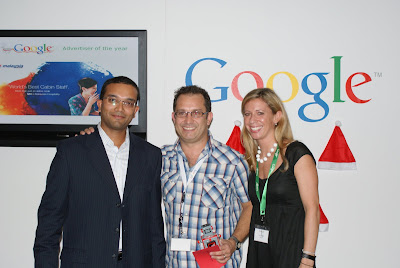
Check out the full press release.
The Googlies awards were given to agencies and advertisers who have successfully and creatively leveraged Google's products and advertising solutions to execute sizzling, memorable online campaigns in the past year.


Check out the full press release.
Tuesday, November 18, 2008
The Last Chance In the Capitalism World ?
Frankly speaking, I would have never imagined this day when USA is struggling with its economy. For instance, the automobile industry is really struggling and gives warning for serious consequences in the wake of collapsing.
It seems these days that people around the world are buying Toyota more often that you think. My uncle in Singapore told me that the two best brands are Toyota and Honda where the former is rugged, tough and economical and the latter is ladylike; smooth, desirable and not-so-tough. He warned me not to buy Nissan and etc. But I think Nissan Grand Livinia is cool.
So, nobody really cares about buying USA made cars, I suppose so. And it seems like the Americans also don't care about royalty anymore.
We have heard the story that Lenovo Thinkpad and Apple Macbook is not the most popular laptop in Japan, it is Toshiba because of royalty culture. Similarly, we also know that Koreans will only use Korean-made technology, so forget about selling to Koreans. There is actually not much different from Taiwan.
The point now is that culture differences has succeeded in helping the economy to become more diversified and helps with competitions which in turn promotes better economy.
But the Internet and globalized media is probably the spoiler. End-users' opinions have never been so important than before, couples with proliferation of blogs, the trend of buying is shifting to one-brand economy. Just think about Microsoft, Google, Toyota and whatever, you would understand.
This may not be a bad thing after all. This offers a window of opportunity for those rising stars to capture the global market with high possibilities faster than we could imagine. My take is that it could happen to you pretty fast, but you have to work hard and fast. Internet is definitely going to be the ultimate market place, we need to find a way to engage users more proactively and effectively through the Internet. And it is low-cost thing to have access to the Internet.
However, what's bitter is that when it is over, it is over. Entrepreneurs today running a risk that there will be no more loyal customers, it is possible that anyone can replace you.(Unless you become the one-brand)
The one-brand economy could perhaps be the peak of capitalism and the world needs to be ready for the next economy and I don't know what it is.
Anyway, the timer is still ticking.
US Economy and The Tech Industry Recently
Got this compilation from email (Thanks to TK Chin)
Happenings Around Malaysia
The job cuts were confirmed during this weekend. Flextronics has announced that the company will cut around 100 jobs at the Limerick plant, said RTE. The reason for the cut backs is due to the global economic downturn.
Flextronics employs around 300 staff at the Limerick facility, which provides warehousing and logistics services to a number of companies in the region.
Dell lays off 700 in Ireland
The Dell facility in Raheen, Limerick is to lay off 700 temporary workers. Additional to that, Flextronics in Limerick is also rumoured to lay off 100 staff.
Mary Coughlan, Irish Minister for Enterprise, Trade and Employment, met with members of Dell’s senior management to discuss the future of 3000 employees at the manufacturing facility in Limerick.
STMicro to lay off at Phoenix facility
Switzerland based chip maker STMicroelectronics is to lay off staff at its Phoenix, Arizona facility. Local news states that the chip maker will lay off 100 staff. The facility - which currently employs around 850 staff - will expercience an ongoing lay off process. azcentral cites spokesman Mike Michael Markowitz in saying that "about 100 of the plant's 850 workers were let go this week and that the process would continue".
Last year, the company announced closure plans for 3 American chip facilities and that chip manufacturing would be transferred to low-cost locations. Staff and management hoped for a buyer to keep the plant open.
Dell workers asked to take unpaid vacation
Media reports state that CEO Michael Dell - of computer giant Dell - has asked employees to consider taking a maximum of 5 days unpaid holidays.
As reported earlier, Dell is currently running a restructuring programme to counteract the economic and financial downturn.
This include 8,900 job cuts, voluntary severance packages and a global hiring freeze. "We are asking employees on a voluntary basis to consider taking off (up to) five days ... as unpaid time off as a flexible way to reduce costs for the company," the CEO was cited in a Reuters report in saying.
Tele-Fonika Kable to cut 900
Polish based cable and wire producer Tele-Fonika Kable plans to lay of 900 employees or 19% of its workforce. The lay offs will affect all production units across the group. The company has seven plants, of which five are located in Poland, said PB. Tele-Fonika Kable also plans to sell parts of its business, however it will not close down any plants. The company wishes to optimize production process and reduce costs.
Happenings Around Malaysia
- Flextronics 4 days week for Month Nov and Dec 2008.
- AMD Penang announced this morning VSS lay off 500 employees.
- Spansion force to take leave (5 days in this quarter)
- Jabil planned shut down from Dec 24 to Jan 4, will be 6 days leave.
- Agilent planned shut down from Dec 24 to Jan 4, will be 6 days leave.
- ASE shut down every fortnightly on Monday starting from Nov 3.
- Fairchild planned ‘Mass Vacation’ for 9 days leave in FY08 (Q2 : 3 days,Q3 : 2 days,Q4 : 4 days)
- ST-NXP Wireless cuts 500 jobs World-Wide, including subcontractors, from the current total of more than 7500 people.
The job cuts were confirmed during this weekend. Flextronics has announced that the company will cut around 100 jobs at the Limerick plant, said RTE. The reason for the cut backs is due to the global economic downturn.
Flextronics employs around 300 staff at the Limerick facility, which provides warehousing and logistics services to a number of companies in the region.
Dell lays off 700 in Ireland
The Dell facility in Raheen, Limerick is to lay off 700 temporary workers. Additional to that, Flextronics in Limerick is also rumoured to lay off 100 staff.
Mary Coughlan, Irish Minister for Enterprise, Trade and Employment, met with members of Dell’s senior management to discuss the future of 3000 employees at the manufacturing facility in Limerick.
STMicro to lay off at Phoenix facility
Switzerland based chip maker STMicroelectronics is to lay off staff at its Phoenix, Arizona facility. Local news states that the chip maker will lay off 100 staff. The facility - which currently employs around 850 staff - will expercience an ongoing lay off process. azcentral cites spokesman Mike Michael Markowitz in saying that "about 100 of the plant's 850 workers were let go this week and that the process would continue".
Last year, the company announced closure plans for 3 American chip facilities and that chip manufacturing would be transferred to low-cost locations. Staff and management hoped for a buyer to keep the plant open.
Dell workers asked to take unpaid vacation
Media reports state that CEO Michael Dell - of computer giant Dell - has asked employees to consider taking a maximum of 5 days unpaid holidays.
As reported earlier, Dell is currently running a restructuring programme to counteract the economic and financial downturn.
This include 8,900 job cuts, voluntary severance packages and a global hiring freeze. "We are asking employees on a voluntary basis to consider taking off (up to) five days ... as unpaid time off as a flexible way to reduce costs for the company," the CEO was cited in a Reuters report in saying.
Tele-Fonika Kable to cut 900
Polish based cable and wire producer Tele-Fonika Kable plans to lay of 900 employees or 19% of its workforce. The lay offs will affect all production units across the group. The company has seven plants, of which five are located in Poland, said PB. Tele-Fonika Kable also plans to sell parts of its business, however it will not close down any plants. The company wishes to optimize production process and reduce costs.
Thursday, November 6, 2008
Software Business Strategy (For Start-Up)
I am just wondering how much should I make by running a software business or as entrepreneur being involved with software activities.
Let's imagine that you started alone and you have a product, and you needed like RM 3,500 per month to survive, you got to at least sell 1 piece at 3,500 rite ? But since the most popular entry-level software in Malaysia (UBS Accounting Software) is selling at RM 598.00 (with hidden cost), and you look at very useful software like Adobe Photoshop CS4 is price at RM 2,869 and technically useful software like Business Objects' Crystal Report at RM 1,800, the dream of doing one product and selling just 1 piece per month may not be feasible. And the dream of selling an off-the-shelve product for RM 5,000 is definitely out!!!!
The reason is that hot sellers like Photoshop is a huge system with so many uncounted functions and it keeps getting better.
So let's say you sell at RM 1,500 per piece, you got to sell to 3 customers per month right ? So imagine that the software is perfect that it doesn't require much support and you maintain that for a year, the next year you got to sell at higher price because you need to start making money. So, by taking into consideration that the Malaysian inflation rate is about 2.1% annually, by the next year you are supposed to sell at about RM 1,531.5.
But what we really concern about is for start-up. Assuming that you can sell the product at RM 1,500 (at year 1 on Jan 1) and just minor supporting the 36 customers for the whole year with one man show while at the same time, re-engineering the product to make it better and to create the next release for year 2 to be launched at Jan 1, then it will be great. The question is always would people really want to buy it ? Because if you projected to sell 36 copies for year 1 and if that number doesn't realize at 31 Dec, you will then be making loses for a one-man-show business.
So, you can't be sure of the sales not that the product is not useful, but whether the trend of the society is able to accommodate you as part of the culture and you can't be sure how much effort you would require to support those 36 customers and at the same time do the work for the next release all with one man effort. The risk of selling the product at RM 1,500 per piece is high (for a start-up).
Let's take a look at what Microsoft had done in the early stage.
It started off with ..
Revenues: $16,005
Employees: 3 (Allen, Gates, and Ric Weiland)
MITS promotes Altair BASIC, the computer language developed by Gates and Allen for the Altair computer. Hobbyists are ecstatic, despite the fact that, even with BASIC, there is little you can actually do with the Altair.
The "MITS Mobile" travels through the western United States demonstrating the Altair and "Micro-soft" BASIC. It also unwittingly distributes copies of not-quite-ready-for-prime-time (i.e., pirated) BASIC.
Revenues: $22,496
Employees: 7
MITS sponsors the World Altair Computer Convention (WACC) in Albuquerque, for Altair owners, dealers, programmers, and anyone interested in microcomputers. The convention features a 20-year-old as the keynote speaker: Bill Gates.
The BASIC Foundation for a company
Revenues: $381,715
Employees: 9
Microsoft's flat fee of $21,000 for what becomes Applesoft BASIC seems like a good idea at the time, until Apple sells more than a million machines with BASIC built in. Put your calculators away; it works out to 2 cents per copy.
Revenues: $1,355,655
Employees: 13
Anticipating the success of the 16-bit processor, Microsoft begins development of simulators in order to speed and simplify code development.
So according to the report, at 13 man power, Microsoft revenue achieved US$ 1 million.
So, imagine this happened to me where I would hire 12 software engineers at RM 3,500 per month, I would spend RM 504,000 on the salary and I would make a profit of Ringgit Malaysia half a million for that year. That is not bad at all.
What I learned from this Microsoft case study are:
And the end of the day, you had wished that Adobe Photoshop had been selling for more expensive. These products determine the price trend but not the inflation rate of 2.1% annually.
Let's imagine that you started alone and you have a product, and you needed like RM 3,500 per month to survive, you got to at least sell 1 piece at 3,500 rite ? But since the most popular entry-level software in Malaysia (UBS Accounting Software) is selling at RM 598.00 (with hidden cost), and you look at very useful software like Adobe Photoshop CS4 is price at RM 2,869 and technically useful software like Business Objects' Crystal Report at RM 1,800, the dream of doing one product and selling just 1 piece per month may not be feasible. And the dream of selling an off-the-shelve product for RM 5,000 is definitely out!!!!
The reason is that hot sellers like Photoshop is a huge system with so many uncounted functions and it keeps getting better.
So let's say you sell at RM 1,500 per piece, you got to sell to 3 customers per month right ? So imagine that the software is perfect that it doesn't require much support and you maintain that for a year, the next year you got to sell at higher price because you need to start making money. So, by taking into consideration that the Malaysian inflation rate is about 2.1% annually, by the next year you are supposed to sell at about RM 1,531.5.
But what we really concern about is for start-up. Assuming that you can sell the product at RM 1,500 (at year 1 on Jan 1) and just minor supporting the 36 customers for the whole year with one man show while at the same time, re-engineering the product to make it better and to create the next release for year 2 to be launched at Jan 1, then it will be great. The question is always would people really want to buy it ? Because if you projected to sell 36 copies for year 1 and if that number doesn't realize at 31 Dec, you will then be making loses for a one-man-show business.
So, you can't be sure of the sales not that the product is not useful, but whether the trend of the society is able to accommodate you as part of the culture and you can't be sure how much effort you would require to support those 36 customers and at the same time do the work for the next release all with one man effort. The risk of selling the product at RM 1,500 per piece is high (for a start-up).
Let's take a look at what Microsoft had done in the early stage.
It started off with ..
Revenues: $16,005
Employees: 3 (Allen, Gates, and Ric Weiland)
MITS promotes Altair BASIC, the computer language developed by Gates and Allen for the Altair computer. Hobbyists are ecstatic, despite the fact that, even with BASIC, there is little you can actually do with the Altair.
The "MITS Mobile" travels through the western United States demonstrating the Altair and "Micro-soft" BASIC. It also unwittingly distributes copies of not-quite-ready-for-prime-time (i.e., pirated) BASIC.
Revenues: $22,496
Employees: 7
MITS sponsors the World Altair Computer Convention (WACC) in Albuquerque, for Altair owners, dealers, programmers, and anyone interested in microcomputers. The convention features a 20-year-old as the keynote speaker: Bill Gates.
The BASIC Foundation for a company
Revenues: $381,715
Employees: 9
Microsoft's flat fee of $21,000 for what becomes Applesoft BASIC seems like a good idea at the time, until Apple sells more than a million machines with BASIC built in. Put your calculators away; it works out to 2 cents per copy.
Revenues: $1,355,655
Employees: 13
Anticipating the success of the 16-bit processor, Microsoft begins development of simulators in order to speed and simplify code development.
So according to the report, at 13 man power, Microsoft revenue achieved US$ 1 million.
So, imagine this happened to me where I would hire 12 software engineers at RM 3,500 per month, I would spend RM 504,000 on the salary and I would make a profit of Ringgit Malaysia half a million for that year. That is not bad at all.
What I learned from this Microsoft case study are:
- Sell the product at a higher price and with lesser customers to support so that you can spend more time innovate the product and nurture future releases
- Always have next release and customers will have to pay for it. This is particularly hard for those who have to deal with agents because customers usually prefer not to buy upgrades when there are agents to service them as compared to just buy it from the shelves. This is why UBS Software is actually charging about RM 200 per annum for support and updates (excluding the agents' interest) and it is back-tracking.Adobe is doing well in this area, people are willing to buy the next release if they have decided to ditch the old releases.
- To follow the Microsoft model, you got to sell the product in CDs or DVDs and not download from the Internet (which is another business model totally).
- To start up, it might be better to sell to one customer (for year 1) at higher price and still retain the rights to resell (for year 2) than trying to sell to 36 customers. To make this happen, you have to look for opportunity and not wait for opportunity. Creating and selling games is a good choice actually. Think of an idea, create the prototype and look for a publisher (for year 1).
- There are only two types of consumer software business model namely the off-the-shelves and the Internet (you have to choose one)
And the end of the day, you had wished that Adobe Photoshop had been selling for more expensive. These products determine the price trend but not the inflation rate of 2.1% annually.
Sunday, October 12, 2008
The End of Financial Industry ?
It has been 10 years ever since the dot-com crashed. While most of those young people like me who gotten ourselves into the industry while we were in college during that period would admit that it is fate that got us this far, we are often unfazed by the fact that there were so much to lose out had we gotten ourselves into other arenas.
It is now 2008 the world is at it again, this time it is affecting the financial industry. The media has dubbed Oct 2008 as Black October and for the first time in history, we are witnessing big nations coming together trying to solve one problem, to prevent the riches from getting poorer.
Well, fair enough, everybody deserves to protect their own interests. But the problem with this financial crisis is far from beginning. In fact, not many layman would not have had any bad experiences yet so far.
The software industry is going to be affected severely, with anticipation that consumers will cut back on investments into software and even upgrades. Software companies need to plan harder now to keep-alive and cash flow is very crucial. (Well, it is for everybody).
It will be a mistake to think that software industry has immunity from the recent financial industry turmoil because there isn't much requirement for capital in the software business. Point taken, but one can't expect to sell software like selling shoes whereby a finished model is finished and the fate of the sales are in the hand of the sales and marketing department. A software, you still need to provide continuous support and that it unlimited cost. Never buy a software which doesn't have any support team, that is a waste of money.
We have to crack our head now to think about where to find cash flows. We can guess that piracy rate will rise back and free software download will increase. Perhaps, software companies can look into providing at least one service on open-source such as deployment or training. People are definitely going to love their Excel more now and they are sure going to ignore new brands and try out new things.
One thing for sure, people are going to move back to fundamentals and nevermind those add-on features which are going to make you sleep better. And this reinstates the uniqueness of iPhone whereby I guess that the sales will not be affected much for the reason that phone is a fundamental, the app store may be annoying but it is nice that it is there.
Perhaps another way to counter this is to maximize availability and affordability and trade-off profitability. Bigger companies like SAP are going to feel the pinch as well.
Software vendors are going to have to work harder because the sales will come slower and internal IT executives will have to buckle up as well because there will be lesser budget for outsourcing. And all these will give 'lifestyle' a very bad name.
In retrospect, this may create a lot of vacancies in the ICT industry where stress is, because the harsher reality from within and outside of the industry will create immense pressure for the knowledge workers, particularly those in R & D, software development, sales and marketing. Talents would be more willing to shift into less stressful jobs but equally tiring jobs such as supports, customers service, management and consulting.
This will in turn create a gap in the technology innovation area because the smaller guys can't wait for 5 years to see huge profits due to constraint budgets and bigger guys can't afford to pay employees with good pay while maintaining a pessimistic outlook. Everybody it seems, have to help the CEO to bear the burden of this reality.
This technology innovation gap will benefit the following parties:
But then again, perhaps this is the time to clear out the old and let the new guys move in. Older guys are definitely going to either stay low-profile or quit the industry totally because 3, 5 or even 10 years will be just too much of a long haul. Now you have to ask yourself, are you old or new ?
It is now 2008 the world is at it again, this time it is affecting the financial industry. The media has dubbed Oct 2008 as Black October and for the first time in history, we are witnessing big nations coming together trying to solve one problem, to prevent the riches from getting poorer.
Well, fair enough, everybody deserves to protect their own interests. But the problem with this financial crisis is far from beginning. In fact, not many layman would not have had any bad experiences yet so far.
The software industry is going to be affected severely, with anticipation that consumers will cut back on investments into software and even upgrades. Software companies need to plan harder now to keep-alive and cash flow is very crucial. (Well, it is for everybody).
It will be a mistake to think that software industry has immunity from the recent financial industry turmoil because there isn't much requirement for capital in the software business. Point taken, but one can't expect to sell software like selling shoes whereby a finished model is finished and the fate of the sales are in the hand of the sales and marketing department. A software, you still need to provide continuous support and that it unlimited cost. Never buy a software which doesn't have any support team, that is a waste of money.
We have to crack our head now to think about where to find cash flows. We can guess that piracy rate will rise back and free software download will increase. Perhaps, software companies can look into providing at least one service on open-source such as deployment or training. People are definitely going to love their Excel more now and they are sure going to ignore new brands and try out new things.
One thing for sure, people are going to move back to fundamentals and nevermind those add-on features which are going to make you sleep better. And this reinstates the uniqueness of iPhone whereby I guess that the sales will not be affected much for the reason that phone is a fundamental, the app store may be annoying but it is nice that it is there.
Perhaps another way to counter this is to maximize availability and affordability and trade-off profitability. Bigger companies like SAP are going to feel the pinch as well.
Software vendors are going to have to work harder because the sales will come slower and internal IT executives will have to buckle up as well because there will be lesser budget for outsourcing. And all these will give 'lifestyle' a very bad name.
In retrospect, this may create a lot of vacancies in the ICT industry where stress is, because the harsher reality from within and outside of the industry will create immense pressure for the knowledge workers, particularly those in R & D, software development, sales and marketing. Talents would be more willing to shift into less stressful jobs but equally tiring jobs such as supports, customers service, management and consulting.
This will in turn create a gap in the technology innovation area because the smaller guys can't wait for 5 years to see huge profits due to constraint budgets and bigger guys can't afford to pay employees with good pay while maintaining a pessimistic outlook. Everybody it seems, have to help the CEO to bear the burden of this reality.
This technology innovation gap will benefit the following parties:
- Very big companies like Micrsoft, Google, SAP and etc
- Gung-Ho Start-Ups who doesn't need much cash-flow to survive
- Fanatic Students who Dare to Reinvent the Wheel
But then again, perhaps this is the time to clear out the old and let the new guys move in. Older guys are definitely going to either stay low-profile or quit the industry totally because 3, 5 or even 10 years will be just too much of a long haul. Now you have to ask yourself, are you old or new ?
Wednesday, October 1, 2008
Why is the Japanese not able to keep up with iPod ?
To cut things short, portable music was invented by Sony and the most famous brand is called the Walkman. Personally, I had a few walkmans in my life. In fact I could remember that I bought my last Japanese stereo cassette recorder by Aiwa before iPod surfaced in the market, that was probably 8 years ago. It is still with me, sitting there doing nothing.

Walkman was cool, everybody wanted a piece of it.
Ever since Steve Job swept us away with iPod, we have almost forgotten about where we come from.
Anyway, it was intriguing for me to want to figure out furthur while I was planning ahead of my venture into the software industry; I have to think about how others have come and evolved and try to figure out the best piece out of it.
So, the obvious question is why didn't the Japs carry on their legacy of the Portable Stereo Radio Cassette Player Cum Recorder into the next renaissance which is what iPod, The Zune, Creative Zen and others are doing right now ???
Big questions. The Japs are smart guys right ?
Some claimed that it is due to the Japanese culture where motivations are driven by external factors while some think that Japs are not as good an innovator than the Americans. Well, it holds weight in both cases as is visible these days, the Japs seem to be losing out in the consumer eletronic markets. I suppose that they are still doing well in the automotive market.
The breakthrough of the answer came from Steve Jobs himself. In the not-so-recent joint interview between Steve Jobs and Bill Gates (on All Things Digital), Steve mentioned that it is due to one reason; software.
So, the Japs can't write software ? Impossible, I can write software.
As I was thinking it through, it came to me naturally as a concept which I already knew.
The question is actually, what type of software ? (Software is a big word)
The answer is software technology.
Japanese don't have software technology, of course, they can write software as much as many Malaysians, but do we have software technology ?
Software technology doesn't just mean the SDK. It can be said to be a platform, but more precisely, it is the operating system for consumer market. You see, the consumer computing world only has basically three types of operating systems, that is Windows, Mac OS and Linux. Nevermind those for enterprise and industry specific such as military, satellites, telecommunications and etc.
Mac OS was literally Unix initially, its ancestor was NextStep, an operating system developed by the company Steve Job founded after he got kicked out from Apple Inc. Nextstep is what Mac OS X is today and I assume that most of the core team members of Mac OS X are from Next. So, the journey of these great Apple products was almost way back 20 years ago. Even Google hasn't got an operating system yet, why ? Because it takes time to build.
So, to build a new operating system or so-called platform is not easy, you got to wait 20 years to see the results. The Japs knew they don't have the luxury of such time.
And worst still, as much as they want to feel proud about themselves for having created the portable music industry, they wouldn't want to adopt other people's technology. Because if you are going to use some sort of Microsoft technology such as Windows Mobile to build a device, then it is a Microsoft technology. This is also the reason why Google are pretty much open source based, they are very much into Python and Java because they don't want to be associated with Microsoft. I mean, you can't claim to be competing against Microsoft when you are using Microsoft technology right ?
But why not Symbian platform ? The Symbian is an open platform for mobile devices and I guess that it is owned by The Symbian Foundation.
Perhaps back in 2001, when iPod was firstly launched, the Symbian platform was not yet having enough APIs for multimedia. I am certain that even if Sony were to adopt Symbian to compete with iPod in 2001, it may not work out that well (because Symbian couldn't match the richness of Mac OS). Now, perhaps so but it could have been too late. And according to this link, Creative Zen was evolved from OASiS operating system developed in India.
But it is interesting to see how Android-phone ever got into the industry, it is actually an effort by Google to build another platform for the mobile industry.
So the conclusion is that for the mobile devices industry which includes mobile phone, PDA, music players and mini computers, we can say that there are just four platforms.
Having thought this through gives me a better perspective of how I should move ahead.
I haven't got an iPod but I suspect so soon, either iPhone or iPod.
And one last thing...
If you look inside the Walkman device, it is clearly apparent that it is so limited. The functions are limited to Play, Rec, Stop, FF, REW, Radio and etc and that is about it.


The next big platform is going to be The Cloud, but in case Google can figure a way to own it in one way or another, we still need a device, at least a mobile phone to connect to The Cloud. Once again, even if you can create a device out of some capacitors, transistors and integrated circuits, you still need a software technology right ?
Interestingly, Google was also launched in year 2001. Wow! What a year. And and and, I remember that moment, in 2001, I was a second year student in APIIT, and I remember that out of a sudden of using Yahoo and Alta Vista, all the lab computers' homepage been changed to this plain page of www.google.com.
Also, one more last thing.... I think this blog will be useful to help us, especially Malaysian technopreneurs to figure out where exactly we want to be, given that it is quite possibly impractical to establish pioneering initiatives in the mainstream computing industry. It is also a good reference for us to figure out where things are headed to and just where we want to fit in, how big the cake is and how much time do we have to make that happen before it is too late.
Malaysians also have to think about not only the fact that you can do things, imagine that even you have PhD in some specialize areas (or common areas) and you can do wonderful things, but can you do things which are totally new; totally pioneering ? There is no point to hoo-hah on having the ability to do something which have already been done and is patented. This is what I learned from Americans.

Walkman was cool, everybody wanted a piece of it.
Ever since Steve Job swept us away with iPod, we have almost forgotten about where we come from.
Anyway, it was intriguing for me to want to figure out furthur while I was planning ahead of my venture into the software industry; I have to think about how others have come and evolved and try to figure out the best piece out of it.
So, the obvious question is why didn't the Japs carry on their legacy of the Portable Stereo Radio Cassette Player Cum Recorder into the next renaissance which is what iPod, The Zune, Creative Zen and others are doing right now ???
Big questions. The Japs are smart guys right ?
Some claimed that it is due to the Japanese culture where motivations are driven by external factors while some think that Japs are not as good an innovator than the Americans. Well, it holds weight in both cases as is visible these days, the Japs seem to be losing out in the consumer eletronic markets. I suppose that they are still doing well in the automotive market.
The breakthrough of the answer came from Steve Jobs himself. In the not-so-recent joint interview between Steve Jobs and Bill Gates (on All Things Digital), Steve mentioned that it is due to one reason; software.
So, the Japs can't write software ? Impossible, I can write software.
As I was thinking it through, it came to me naturally as a concept which I already knew.
The question is actually, what type of software ? (Software is a big word)
The answer is software technology.
Japanese don't have software technology, of course, they can write software as much as many Malaysians, but do we have software technology ?
Software technology doesn't just mean the SDK. It can be said to be a platform, but more precisely, it is the operating system for consumer market. You see, the consumer computing world only has basically three types of operating systems, that is Windows, Mac OS and Linux. Nevermind those for enterprise and industry specific such as military, satellites, telecommunications and etc.
Mac OS was literally Unix initially, its ancestor was NextStep, an operating system developed by the company Steve Job founded after he got kicked out from Apple Inc. Nextstep is what Mac OS X is today and I assume that most of the core team members of Mac OS X are from Next. So, the journey of these great Apple products was almost way back 20 years ago. Even Google hasn't got an operating system yet, why ? Because it takes time to build.
So, to build a new operating system or so-called platform is not easy, you got to wait 20 years to see the results. The Japs knew they don't have the luxury of such time.
And worst still, as much as they want to feel proud about themselves for having created the portable music industry, they wouldn't want to adopt other people's technology. Because if you are going to use some sort of Microsoft technology such as Windows Mobile to build a device, then it is a Microsoft technology. This is also the reason why Google are pretty much open source based, they are very much into Python and Java because they don't want to be associated with Microsoft. I mean, you can't claim to be competing against Microsoft when you are using Microsoft technology right ?
But why not Symbian platform ? The Symbian is an open platform for mobile devices and I guess that it is owned by The Symbian Foundation.
Perhaps back in 2001, when iPod was firstly launched, the Symbian platform was not yet having enough APIs for multimedia. I am certain that even if Sony were to adopt Symbian to compete with iPod in 2001, it may not work out that well (because Symbian couldn't match the richness of Mac OS). Now, perhaps so but it could have been too late. And according to this link, Creative Zen was evolved from OASiS operating system developed in India.
But it is interesting to see how Android-phone ever got into the industry, it is actually an effort by Google to build another platform for the mobile industry.
So the conclusion is that for the mobile devices industry which includes mobile phone, PDA, music players and mini computers, we can say that there are just four platforms.
- Apple's iPod and iPhone
- Microsoft's Windows Mobile
- Symbian & Java (Sony, Samsung, Nokia, LG and etc)
- Google's Android
Having thought this through gives me a better perspective of how I should move ahead.
I haven't got an iPod but I suspect so soon, either iPhone or iPod.
And one last thing...
If you look inside the Walkman device, it is clearly apparent that it is so limited. The functions are limited to Play, Rec, Stop, FF, REW, Radio and etc and that is about it.


The next big platform is going to be The Cloud, but in case Google can figure a way to own it in one way or another, we still need a device, at least a mobile phone to connect to The Cloud. Once again, even if you can create a device out of some capacitors, transistors and integrated circuits, you still need a software technology right ?
Interestingly, Google was also launched in year 2001. Wow! What a year. And and and, I remember that moment, in 2001, I was a second year student in APIIT, and I remember that out of a sudden of using Yahoo and Alta Vista, all the lab computers' homepage been changed to this plain page of www.google.com.
Also, one more last thing.... I think this blog will be useful to help us, especially Malaysian technopreneurs to figure out where exactly we want to be, given that it is quite possibly impractical to establish pioneering initiatives in the mainstream computing industry. It is also a good reference for us to figure out where things are headed to and just where we want to fit in, how big the cake is and how much time do we have to make that happen before it is too late.
Malaysians also have to think about not only the fact that you can do things, imagine that even you have PhD in some specialize areas (or common areas) and you can do wonderful things, but can you do things which are totally new; totally pioneering ? There is no point to hoo-hah on having the ability to do something which have already been done and is patented. This is what I learned from Americans.
Friday, August 29, 2008
Malaysia ICT Budget 2007
Check out the Budget 2009 highlights.
Lazy to read ? Here are the summaries for what is good for the ICT industry in Malaysia.
According to Cisco Malaysia, MSC Malaysia, Intel Malaysia, Symantec Corp, Hitachi Data Systems, IBM Malaysia and Micrsoft Malaysia...
All speak the same wavelength that the announced budget is good for:
Comparison to previous budget (2006), this one is rather low-profile, low-risk and conservative. There is no excitement for R & D and growth simulation. It is more about cushioning.
Lazy to read ? Here are the summaries for what is good for the ICT industry in Malaysia.
According to Cisco Malaysia, MSC Malaysia, Intel Malaysia, Symantec Corp, Hitachi Data Systems, IBM Malaysia and Micrsoft Malaysia...
All speak the same wavelength that the announced budget is good for:
- Tax relief: Accelerated Capital Allowance on expenses incurred on ICT equipment
- Incentives for SME through Bank Negara
- Manpower Development
Comparison to previous budget (2006), this one is rather low-profile, low-risk and conservative. There is no excitement for R & D and growth simulation. It is more about cushioning.
Thursday, August 28, 2008
Why Mobile Number Portability (MNP) ?
 Image via Wikipedia Malaysian have been waiting for three years, finally today is the day.
Sometime in Feb 2005, this blog invested effort to study the market saturation of mobile phone industry in Malaysia. Check out the blog entry.
So indeed, industry experts have been trying to visualize what is going to happen when the market saturates.
Observe this quote ..
For a developing country like Malaysia, some pundits believe cellular companies (celcos) may have to scrape the bottom of the barrel for the next wave of customers. Other analysts believe the celcos could rev up subscriber numbers by lowering entry barriers further.
Both of these scenarios are happening now in fact, but the industry actually has a better way of dealing with market saturation, it is a best practice being practiced around the world; Mobile Number Portability (MNP).
Yes, MNP is catered to cushion market saturation by providing more spaces for healthy competitions amongst the celcos.
This is good, really. I endorse this.
The effort will make sure that industry players do not fall into the trap of complacency. They have to be prudent with the economics of their businesses all the time and to maintain a healthy customer-relationships as always as possible.
Why ? It is not hard to guess. Look at all the monopolies around Malaysia now, how I wish there is such thing as broadband portability.
Just imagine that if someone is doing illegal throttling, all you need to do is to pay RM 25 to port over to other service providers.
And culprits can't afford to be ignorant because Switzerland can't be bought over (like Netscape), it is an open source !
MNP is a good implementation ruled by MCMC to prevent unhealthy industry practices. It must and was initiated by MCMC.
Latest Updates:
Celcom to benefit from MNP.
Celcom's net profit rose 29% to RM631 million in the first half ended June 30, 2008 from a year earlier.Strong performance was mainly attributed to higher acquisition and usage of postpaid as a result of the successful launch of the Celcom Executive Plan (CEP) and growing demand for mobile broadband services.

Monday, August 18, 2008
Asia Pacific Corporate Blogging Masterclass 2008
 Image via Wikipedia Much to my delights, as what we have predicted in 2006, corporate blogging will take momentum.
The question is always, why not ? But momentum really takes time to gather, now it is starting to roll ? Wow dude, I am excited about this.
LiewCF, KennySia and others will be even more famous.
And rumors claimed that Malaysia's ex ruling political coalition (Barisan Nasional) lost edges to blogs... And they have taken the cyberspace more seriously. Such phenomenon even caught the ex-PM Tun Dr. Mahathir to start his own blog and became the most successful blog (in terms of traffic) within the shortest period of time. Politics, controversies, rumors, gossips simply sell like hotcakes. And Malaysian just love it; to compensate boring lifestyles.
I just received a marketing promotions about Asia Pacific Corporate Blogging Masterclass, I must admit that after years of receiving uninvited emails, this is the first of its kind. Bravo !
Well of course, having said that, bloggers are not specifically gifted people per se. Yes, most bloggers can write good english, some have great ideas to share and to entertaint, while some have great web engineering skills. In my opinion, successful bloggers are usually those who persevere and are able to maintain a blog with the slightest efforts.
In retrospect, not everybody have the license to blog freely. If you are working for a big corporate, high chances that you are not allowed to blog about your job and risk exposing corporate secrets. If you are a CEO of a big IT companies, it is just not too good to blog about topics such as "MLM is a great business". Why ? because that would contradict your CEO image. So, it is kind of complex to mingle blogs with corporates.
Blogging requires a lot of effort per se, particularly a blogger must have the ability to repaint a message into a new dimension by sacrificing time for cigarettes, relaxation and etc. We must always stick to a virtue of not running toooo far away from what we stood for (i.e The IT-Sideways), while at the same time, adapt to the constant interruptions of new trends that massively sweep us daily in the media front, especially the websphere. It is exciting, challenging and always rewarding.
The promotion suggested the following benefits of corporate blogging:
- Build rapport with customers.
- Free feedback and suggestions from key constituents.
- Increased website traffic from higher search engine rankings.
- Position your business as a thought leader.
- Lead generation.
Blogging is unbelievably lost-cost and its effects can be tremendously fantastic.
In my opinion, all marketing executives must be represented with a blog if not supported by corporate blogs. The logic is very simple, if you are passionate about what you are marketing, why can't you write something about it every few days or at least once per week ? Afterall, this is the most fundamental aspect of your job, to create life out of your products, to associate with emotions and human touch.
Finally, according to the promotion, the following people should do corporate blogging.
- CEOs
- Heads / Managers of Corporate Communications
- Public Relations Managers and Executives
- Marketing Managers and Executives
- Online Managers
- Marketing Managers
- Marketing Communications Managers
- Branding and Advertising Managers
- Web Marketing Managers
- External Relations Managers
- Business Development Managers
- IT Managers
So, now these people have the license to blog if we can create a culture for that. In a way, I endorse it because if we start to merge our professional life with personal engagement, it is a clear path to a better success.
Check out the promotion here.
By the way, if we do it right, it can be bigger than The Dark Knight ?

Tuesday, July 15, 2008
Intelligently Green Forum 2008
 Charles DarwinSAS presented world's first ever environmental performance measuring software launched by WWF and Maya Karin.
If you want to go green, how would you go about it ? What indicators should you look at and how should you start ?
SAS has a solution; Sustainability Management Scorecard.

According to SAS, the challenges of sustainable management are:
- Measure emissions and consumption, physically and financially, throughout your enterprise value chain or product life cycle.
- Ensure regulatory compliance.
- Build new business strategies with proven return on investment.
- Stay ahead of the competition.
- Manage and forecast complex alignment of strategies, financial costs and resources across the organization.
- Improve performance by focusing on those metrics that will drive positive impacts on your Triple Bottom Line.
- Report ongoing performance to key stakeholders and regulatory agencies to improve the transparency of green operations and corporate stewardship initiatives.
Sustainability is about three main elements. (1). Economic (2). Environment (3). Social.
And to tell us how the harmony interactions of these three elements can bring corporate benefits, the forum invites Ms. Choon Bow Bow (Director of Marketing), WWF Malaysia to give us some insights.
According to Ms. Choon, a harmonic sustainability means having a good CSR (Corporate Social Responsibility) which complements business.
It is a product differentiation strategy motivated by cause-related marketing. It reaps the following benefits:
- Increase sales
- Reaching new market segments
- Improve employee relationship
- Enhance customer's loyalty
- Boost corporate brand
- Having the right partnership - strategic fit between cause and desired brand value
- True belieft & commitment to the cause
- Prepare to invest time & money
She quoted a few examples:
| Who | Activities | Benefits |
| BMW & Susan G Comen (Breast Cancer Foundation) | BMW donates $1 for every mile of test drive. | - Soften the brand of BMW and reaches the women’s market |
| Honda Malaysia Sdn. Bhd. | Challenging Spirit : Rhino Rescue | Exemplifies the brand of “Challenging Spirits & Realizing Dreams” |
| Boh: Brings People Together | Saving orang utan | Generates goodwill for the brand |
| HSBC Climate Partnership | - 100 million commitment for 5 years - Creates activities (that is climate nature) around the brand. | Generates goodwill for the brand |
Some statistics presented during the forum.
- 72% of consumers would switch brand if the price is almost the same, but for a better cause.
- 75% would be happier to work for a company associated with a good cause.
- 88% of malaysian think that companies should be environmental friendly
- 85% endorses the work of organizations like WWF
And then Mr. Thomas Spiller (Snr Director, International Programs, SAS) provides a more direct insights about business.
According to him, Charles Darwin (Father of Economics) quoted that the winner will be the one who can adopt to changes faster and not the fittest or the smartest. And supply and demand is no longer matching and as a result, companies really need to adopt faster to perform better.
Mr.Spiller shared that going green is a long term problem for human, because we have no choice. And going green actually helped companies to create better profits for the products. For instance, GE's Ecomagination generated $US 20 billion revenues and UPS turn-left-only-shortest-path's initiative saved them 13 millions liters of fuel (saving money as a result). Same goes to DuPont's initiative of reusing waste.
Not just for the profit, it results in employee retention because employee now can stay focus on their jobs which promote a good cause. This is exciting.
According to Mr. Jimmy Cheah, people are keen on the subject more than any other thing.
In short, to reap similar benefits, know your CSR first and to do that get SAS' Sustainability Management Solution. Why ? Because it is beneficiary for all.
Actress Maya Karin; the Ambassador of Environment for the Ministry of Natural Resources & Environment of Malaysia stresses the followings on top of coexistence:
- Search for solutions for a sustainable future
- The need to set new standards and change our attitude
- Saving environment is saving ourselves
- Redirect development into sustainable ones
Coexistence teaches us about mutual respect and makes us better people . (15th July 2008,Maya Karin)

And to learn how well SAS perform in terms of CSR, check out this full report.
Check out the full press release this page.
More about SAS.
Thomas Spiller
Thomas Spiller is Senior Director for International Programs at SAS. He joined the company early 2007 and, in his capacity, Thomas is in charge of driving the global public policy initiatives that SAS has launched, such as sustainability or e-Government. He is also in charge of representing SAS vis-à-vis international Institutions and national, regional and local governments throughout the world bringing with him fifteen years of experience of International Affairs both at the Corporate and Government levels.
He started his career in 1993 working two years in the communication and information department in the office of the French Prime Minister, Mr. Edouard Balladur.
Thomas then spent the next eight years as government affairs manager for AREVA, the world leader in nuclear power, with assignments in Paris, Washington, Tokyo and finally Brussels. He was notably in charge of economics, waste management, security and societal aspects of nuclear energy.
Building on his energy expertise, Thomas then worked for five years for GE (General Electric) at their European Headquarters in Brussels. As Counsel for European Affairs, he represented GE Energy, GE Oil and Gas as well as GE Aviation to the European Union where he was active in shaping policy that led to the current EU energy and environmental policies being discussed in Brussels.
Thomas Spiller is an active member of the American Chamber of Commerce to the European Union (AmCham EU) and is a frequent speaker in international business and policy circles with experience at the European Commission, European Parliament, World Economic Forum, International Maritime Organization, North Atlantic Treaty Organization, Transatlantic Policy Network, Center for European Policy Studies…
Thomas Spiller graduated a lawyer from La Sorbonne University Paris with degrees in Political Science, Defense and International Relations. In his personal time, Thomas Spiller enjoys scuba diving and collecting vintage watches.
Jimmy Cheah:
Jimmy is the Managing Director of SAS Institute Sdn Bhd since April 2003. He is responsible for driving the business development and growth of SAS Malaysia and he manages the entire sales, marketing and operational activities. During his three years with SAS, the company saw an increase in operating revenue by more than 60%, employee headcount by 60% and a 20% growth in customer portfolio.
Jimmy has a wealth of experience and expertise in a wide range of sectors. He has over 20 years experience in IT and has held executive positions with international ERP and Supply Chain software companies, including the “Big Four” consultancies in Malaysia. During his 10 years as a consultant, he has served organizations in Government, Manufacturing, Financial Institutions, Retail and Healthcare sectors in a variety of engagements including developing IT plans and financial and operations review.
He graduated from the University of New South Wales, Australia with a Bachelor of Science degree in Computer Science and Information Systems.

Subscribe to:
Posts (Atom)